

Side Quest · In progress
Taking volunteering off WhatsApp groups and spreadsheets
Sevarah · Volunteer Management Platform
Year
2026
Role
Product Lead
Type
Side Project
Key Outcomes
3
User Groups
3
Team Size
Web + App
Platforms
One place for NGOs, volunteers and CSR teams to run volunteering, replacing WhatsApp groups and spreadsheets with structured events, shifts, tasks and verified hours.
Screens
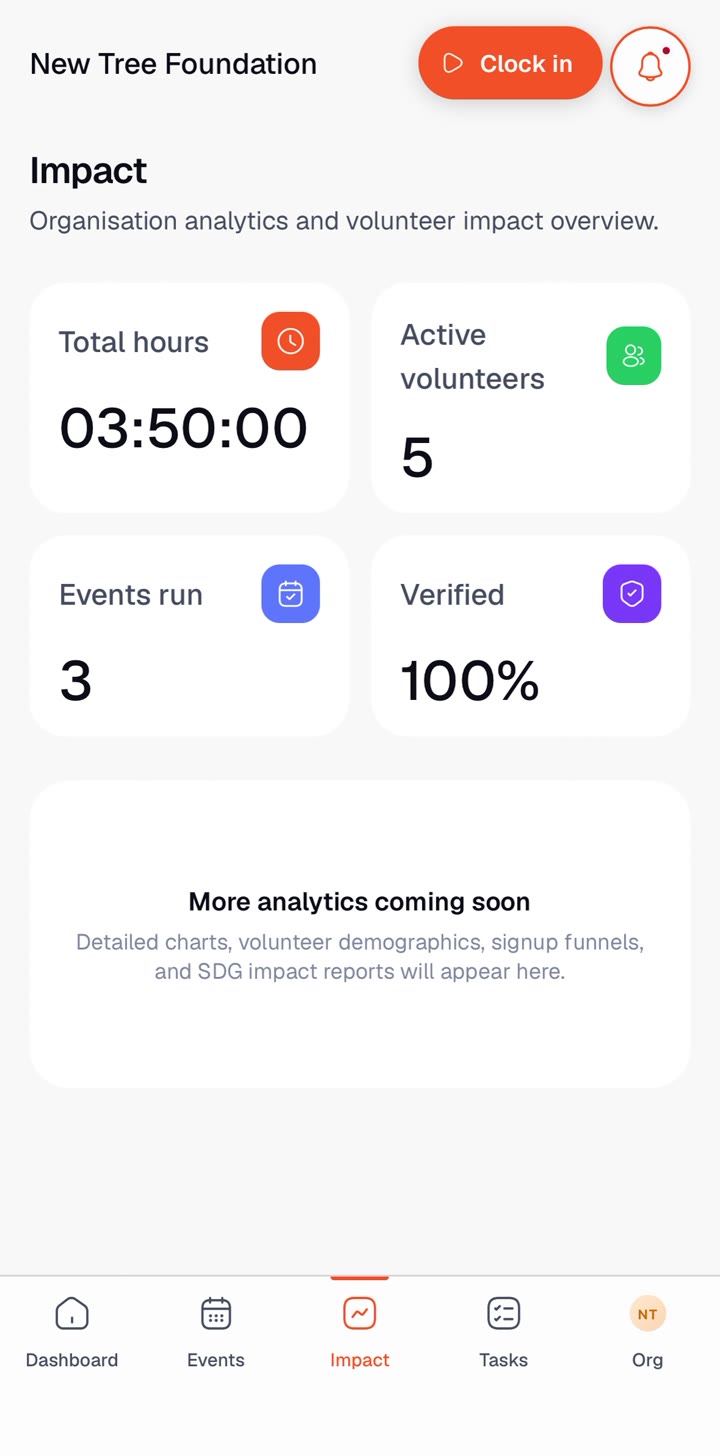
Sevarah is a volunteer platform connecting NGOs, volunteers and corporate CSR teams. It's a small team effort: I lead the product, working with a UX/UI designer and a researcher and art director. The platform is built with AI: I decide what gets built and why, and AI writes the code.
Concept
The Problem
Volunteer coordination in India runs on WhatsApp groups and spreadsheets. Volunteers can't easily find opportunities, NGOs struggle to track who showed up, and CSR teams have budgets but no simple way to deploy them or measure the impact. Three groups, three different workflows, and nothing connecting them.
Solution
Three Experiences, One System
Each group gets an experience built around its own job, all running on one shared system underneath.
NGOs
Create events and shifts, manage volunteers, track attendance and approve the hours volunteers log.
Volunteers
Find opportunities by cause, place and time, clock in and out, update tasks and build a verified record of their hours.
CSR Teams
Find vetted NGOs, sponsor events, track employee participation and pull reports ready for CSR compliance.
Research
Built for the People Using It
Talking to NGOs and volunteers changed the plan. Many of the volunteers the team spoke to weren't comfortable with technology, and asking them to open a web app in a browser was already a barrier. So we built a native app, where Sevarah sits on the home screen like any other app they already use.
App over browser
A native app removed the step that lost people: finding and opening a web link.
Plain choices
Key moments use simple, guided options. Clocking out asks how it went (done, still working, partly done or couldn't finish) instead of showing a form.
Hours you can trust
Every logged hour reaches the NGO with a status to approve, so impact reports are verified, not self-reported.
AI Process
Directing the Build with AI
I don't write code. My role is to be the brain of the build: research the options with AI, decide what to build and what to leave out, and set the rules the code has to follow. AI writes the code inside those rules.
Research before decisions
Every major choice, from sign-in to how data is shared between the three groups, was researched with AI before committing to it.
A design system, not one-off screens
Colours, type and components are defined once as tokens and reused everywhere, so nothing is hard-coded screen by screen.
Each group sees only its own data
I set the rule that every organisation's data stays separate, and that each group only sees what its role needs.
Stack chosen with AI
After comparing options with AI, we went with Next.js for the web app, Supabase for the database and Clerk for sign-in.
Team
Team & My Role
Sevarah is a team effort, and each of us owns a part of it.
Product Lead (me)
Product vision, priorities and the key decisions, plus directing the AI build.
UX/UI Designer
Interaction design, user flows and interface design across all three experiences.
Researcher & Art Director
User research with NGOs and volunteers, brand identity and visual direction.
Next
Using What a Phone Can Do
Moving to a native app opened up features a web app couldn't offer. The team explored using Bluetooth and proximity to confirm a volunteer is actually at an event, so attendance can be verified nearby without codes or paperwork.
In Progress
Coming soon
This project is in active development. Get in touch to learn more.
Get in Touch